

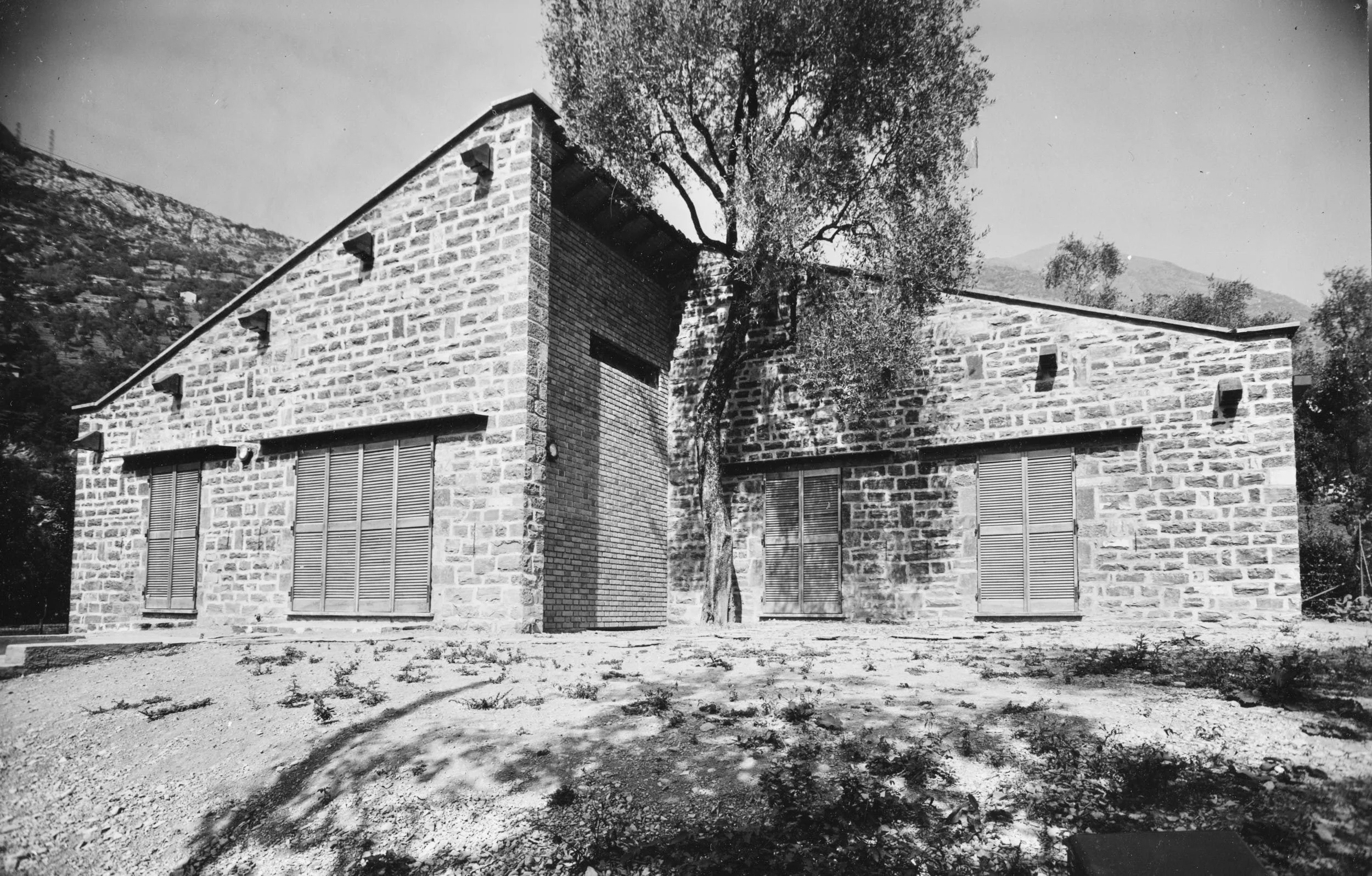
Nel primo entroterra della Zoca de l’Oli coltivato a olivi, l’architetto Gian Casè progetta nel 1970 una terza abitazione, in ideale collegamento architettonico con le due precedenti a lago. Volendo preservare un olivo secolare, l’edificio viene organizzato in due corpi sfalsati; verso la strada, la zona giorno, aperta su una terrazza pergolata, e la zona notte nella parte più interna del giardino. Per le murature principali viene scelta la pietra locale, che consente di armonizzare l’edificio sullo sfondo degli oliveti che incorniciano il golfo dell’isola Comacina. / In the first hinterland of the Zoca de l'Oli planted with olive trees, the architect Gian Casè designed a third house in 1970, in an ideal architectural connection with the two previous ones on the lake. Wanting to preserve a centuries-old olive tree, the building is organized into two staggered bodies; towards the street, the living zone, opening onto a pergola terrace, and the sleeping zone in the innermost part of the garden. For the main walls, local stone is chosen, which allows the building to be harmonized against the background of the olive groves that frame the gulf of the Comacina Island.
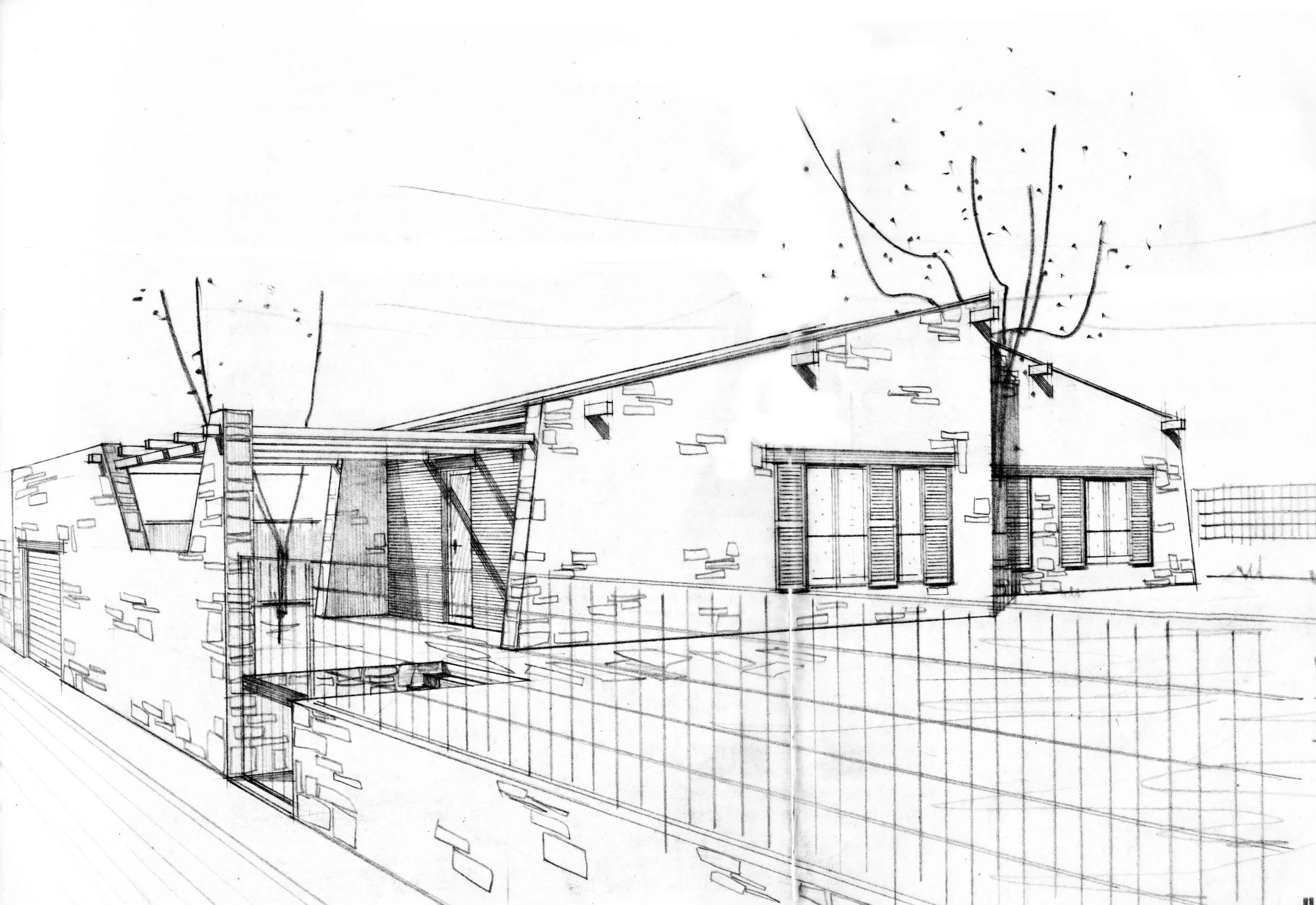
Questo disegno prospettico, nel caratteristico stile dell’architetto Casè, sottolinea la modernità del nuovo edificio, fermi restando i materiali della tradizione: la pietra grigia di estrazione locale, il mattone a vista; il legno di castagno per le travature; i serramenti esterni a persiana per schermare la luce consentendo il passaggio dell’aria. / This perspective design, in the characteristic style of the architect Casè, emphasizes the modernity of the new building, without prejudice to the traditional materials: the gray stone of local extraction; the exposed brick; the chestnut wood for the beams; the external louvered windows to screen the light allowing the passage of air.
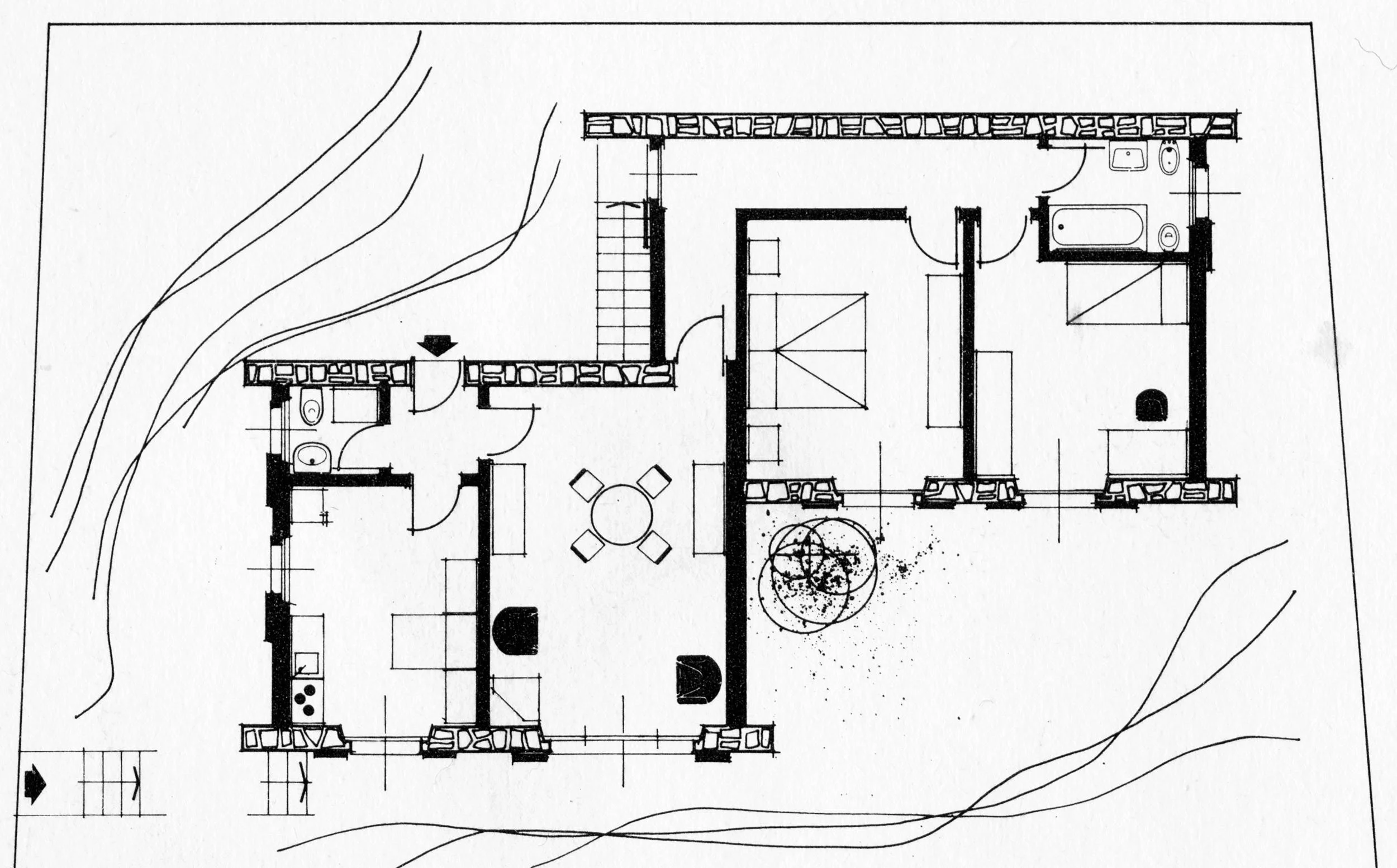
Questa planimetria chiarisce come il desiderio di preservare il vecchio olivo abbia guidato la mano dell’architetto in una serie di scelte che hanno felicemente inserito l’edificio nel contesto agricolo di quel tempo. Altrettanto chiara è l’equilibrata distinzione in superficie e funzione della zona giorno, verso la strada, dalla zona notte, verso la campagna, con le finestre principali panoramicamente orientate a sud verso il lago. / This plan makes it clear how the desire to preserve the old olive tree guided the architect's hand in a series of choices that effectively placed the building in the agricultural context of that time. Equally clear is the balanced distinction in surface and function of the living area, towards the street, from the sleeping area, towards the countryside, with the main windows facing south towards the lake.